
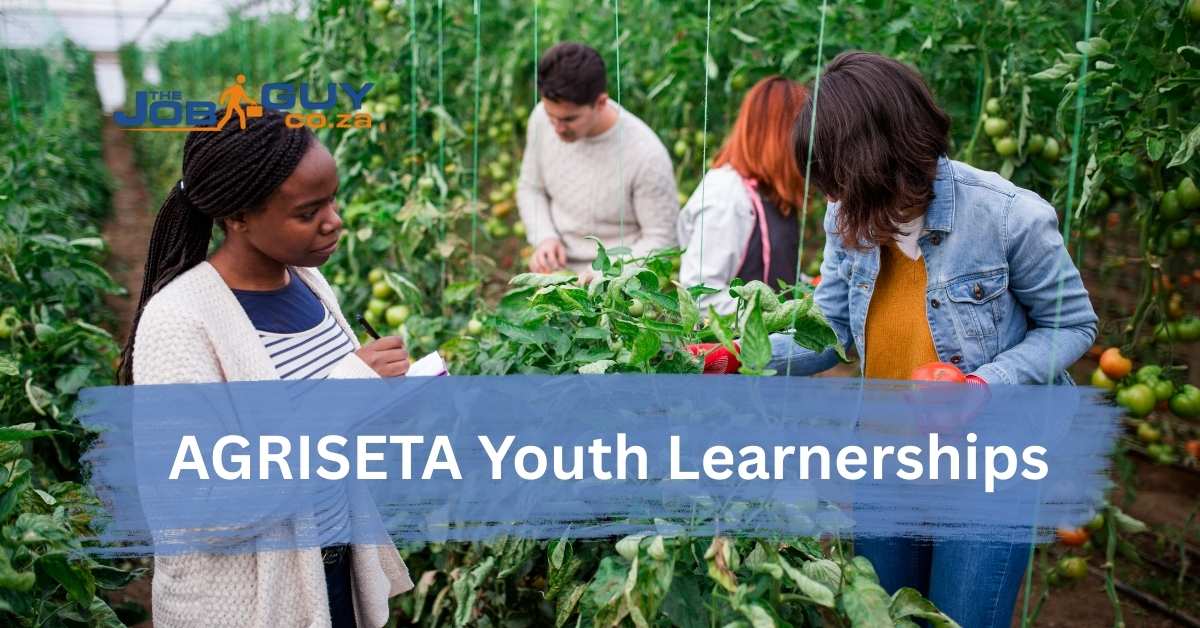
Discover the AGRISETA Youth Learnership 2026/2027, including entry requirements, benefits, qualifications, application steps, and career opportunities across agriculture.
The AGRISETA Youth Learnership 2026/2027 offers young South Africans a valuable opportunity to gain accredited agricultural skills, workplace training, and pathways to permanent employment. This programme supports inclusive development within one of the country’s most vital economic sectors while empowering unemployed youth with nationally recognised qualifications.
What Is AGRISETA and What Does It Do?
AGRISETA is the Sector Education and Training Authority responsible for skills development in the agriculture, forestry, and agribusiness sectors. Its role includes:
- Funding accredited learnerships, apprenticeships and skills programmes
- Supporting rural development and youth employment
- Ensuring alignment with national skills priorities
- Accrediting training providers and monitoring programme quality
The AGRISETA Youth Learnership 2026/2027 is designed to build essential competencies across farming, agri-processing, environmental management, and related industries.
Why the AGRISETA Learnership Matters in 2026/2027
South Africa’s agricultural sector continues to expand, driven by export growth, agri-tech innovation and increased demand for skilled workers. The 2026/2027 cycle places strong emphasis on:
- Technical farming and crop production skills
- Sustainable agriculture and climate-resilient practices
- Agribusiness and supply chain management
- Youth employability within rural communities
For many participants, the programme becomes a pathway to formal employment, entrepreneurship, or further study.
Learnership Structure and Duration
The learnership follows AGRISETA’s standard structure, combining:
- Theoretical Training – Completed through an accredited agricultural training provider
- Practical Workplace Training – Conducted on farms, agri-processing facilities or partner organisations
- Portfolio of Evidence (PoE) – Assessed throughout the programme
- Final Competency Assessment – Leading to an NQF-aligned qualification
Learnerships generally run for 12 months, with full-time participation required.
Qualifications Offered Under AGRISETA Youth Learnership 2026/2027
Programmes vary across provinces and host employers, but the most common NQF qualifications include:
National Certificate: Mixed Farming Systems (NQF 1–4)
Learners gain foundational skills in:
- Crop and livestock production
- Farm maintenance
- Basic agri-equipment handling
- Safety and environmental practices
National Certificate: Animal Production (NQF 2–4)
Training covers:
- Livestock management
- Feeding and nutrition
- Breeding fundamentals
- Animal health practices
National Certificate: Plant Production (NQF 2–4)
Designed for crop-focused learners, including:
- Soil preparation
- Irrigation
- Pest and disease control
- Harvesting techniques
National Certificate: Horticulture (NQF 2–4)
Relevant to nurseries, landscaping and greenhouse environments.
National Certificate: Agri-Processing and Agri-Business Support
Covering:
- Food processing
- Packaging
- Quality control
- Agribusiness operations
Who Can Apply? Entry Requirements for 2026/2027
The AGRISETA Youth Learnership is open to unemployed South Africans who meet the following criteria:
- Aged 18 to 35 years
- Grade 10–12 depending on the programme requirements
- Able to commit to 12 months of training
- Not currently enrolled in another learnership or full-time programme
- South African citizens with a valid ID
Additional advantages:
- Previous agricultural experience
- Residing in rural or farming communities
- Willingness to work outdoors and perform physical tasks
Key Benefits of Joining the Learnership
Learners gain a wide range of benefits, including:
Accredited Qualification
Upon completion, learners receive an NQF-aligned national certificate recognised throughout the agricultural sector.
Monthly Stipend
Participants receive a stipend to cover basic expenses during the programme. Stipend amounts vary based on SETA funding guidelines.
Practical Work Experience
Hands-on exposure enhances employability and equips learners with real workplace skills.
Employment Opportunities
Graduates often find opportunities in:
- Commercial and small-scale farms
- Agribusinesses
- Packhouses and processing plants
- Retail and supply chains
- NGOs and community agriculture projects
Pathways to Entrepreneurship
Learners gain skills to start their own small agricultural enterprises, including poultry, vegetable production, or mixed farming.
How to Apply for AGRISETA Youth Learnership 2026/2027
Applications typically open annually via partners, employers and accredited training providers. Follow the steps below:
Step 1: Prepare Your Supporting Documents
Commonly required documents include:
- Certified South African ID
- Certified school results or highest qualification
- Updated CV
- Proof of residence
- Any relevant certificates
Step 2: Apply Through Accredited Training Providers or Employers
Applications open through:
- Agricultural colleges
- Commercial farms
- NGOs running youth development projects
- Provincial agriculture departments
- AGRISETA-funded training centres
Step 3: Attend Interviews or Assessments
Some providers conduct literacy, numeracy or general workplace readiness assessments.
Step 4: Sign the Learnership Agreement
Successful applicants must sign:
- Employment contract with host employer
- Learnership agreement with training provider
- SETA learnership documentation
Useful Links
What to Expect During the Programme
The learnership is structured to help learners develop both technical and employability skills.
Typical Training Modules
| Component | Topics Covered |
|---|---|
| Technical Skills | Crop production, livestock care, soil science, irrigation, machinery basics |
| Workplace Skills | Communication, teamwork, problem solving |
| Safety Training | Chemical handling, first aid, farm safety protocols |
| Business Skills | Record keeping, marketing basics, agri-entrepreneurship |
Assessment Components
- Practical demonstrations
- Written assessments
- Supervisor evaluations
- Portfolio of Evidence submissions
The programme is completed only when all competencies are achieved.
Career Opportunities After Completion
Graduates can pursue careers such as:
- General farm worker
- Crop production assistant
- Livestock assistant
- Greenhouse operator
- Packhouse assistant
- Agri-processing operator
- Junior agricultural technician
- Farm supervisor (with experience)
- Small-scale farmer or agricultural entrepreneur
The learnership provides a strong foundation for further studies, including agricultural diplomas and advanced NQF qualifications.
Tips for a Successful Application
To increase your chances:
- Apply early and follow all instructions carefully
- Ensure your documents are certified and readable
- Present a clear, updated CV
- Demonstrate enthusiasm for agriculture
- Attend training providers’ open days or information sessions
Important Note on Availability for 2026/2027
AGRISETA funds hundreds of programmes annually, but each cycle depends on:
- Funding allocations
- Partnerships with employers
- Provincial support structures
Opportunities vary by province, and not all providers offer the same learnerships. Regularly check announcements from provincial departments of agriculture and accredited training centres.
2 thoughts on “AGRISETA Youth Learnership 2026/2027”